
India's duopoly in the domestic skies -- where IndiGo and Air India collectively control over 90 per cent of the market -- is highly skewed, leaving very little room for new players

The Union Budget 2025-26 had allocated Rs 2,33,210.68 crore (BE) to the ministry helmed by Union Home Minister Amit Shah.
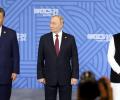
China has expressed its support for Russia's initiative to revive the Russia-India-China (RIC) troika, emphasizing its importance for regional and global security and stability.
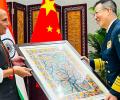
Defence Minister Rajnath Singh, in his meeting with Chinese counterpart Dong Jun in Qingdao on June 26, proposed that India and China should solve the "complex issues" under a structured roadmap comprising steps to de-escalate tensions along the frontiers and rejuvenate the existing mechanism to demarcate the borders.
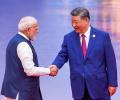
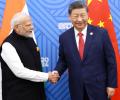
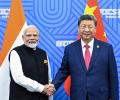
Prime Minister Narendra Modi and Chinese President Xi Jinping held talks focusing on rebuilding bilateral relations, emphasizing border peace and addressing cross-border terrorism.

China is set to build a rail link connecting Xinjiang province with Tibet, part of which will run near the Line of Actual Control (LAC) with India.

China has objected to Indian Minister Kiren Rijiju's remarks on the Dalai Lama's reincarnation, urging India to be cautious on Tibet-related issues to avoid impacting bilateral relations. China insists any future Dalai Lama must receive its approval.
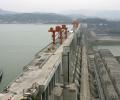
China defends its construction of a dam on the Brahmaputra river in Tibet, addressing concerns from India and Bangladesh about its potential impact on water flow and the environment.

India has rejected China's response to the detention of an Indian national from Arunachal Pradesh at the Shanghai airport, asserting that the border state is an integral part of the country. The incident involved Pema Wang Thongdok, who was detained for 18 hours for holding an Indian passport.

In a culture where children take up the profession of their father, her becoming a politician was seen as natural and acceptable.

This is the first Budget in my memory of Budgets over the last half a century which has embraced upfront, enthusiastically and emphatically, technology, modernity and fiscal sobriety, notes Shreekant Sambrani.
India on Wednesday outright rejected China's attempts to rename some places in Arunachal Pradesh, saying such 'preposterous' attempts will not alter the 'undeniable' reality that the state 'was, is, and will' always remain an integral part of India.

Prime Minister Narendra Modi is visiting Japan and China to further national interests and build cooperation for regional and global peace.

'Many senior Bangladeshis feel Bangladesh will fall into anarchy if the Jamaat becomes an important part of a future government or has disproportionate influence in the government.'
The Chinese Defence Ministry has stated that the Indian and Chinese militaries are implementing the resolutions to end the standoff in eastern Ladakh in a "compressive and effective manner." This follows the disengagement process completed late last year after a pact for troop withdrawal from Depsang and Demchok, the last two friction points in eastern Ladakh. The disengagement has paved the way for the resumption of various dialogue mechanisms between the two countries, with the aim of normalizing bilateral relations.

India and China on Monday held a fresh round of military talks with a focus on disengagement of troops in the remaining friction points in eastern Ladakh and ease overall tensions in the region.

India is preparing to resume the Kailash Mansarovar Yatra, a pilgrimage to Mount Kailash in Tibet, after a three-year hiatus. The decision comes as part of efforts to improve relations between India and China, which have been strained since a military standoff in 2020. The two countries have also agreed in principle to resume flight services between them.

Lt Gen Kalita also stated that the Army is constantly monitoring the activities across the border and is well prepared to meet any emerging challenges.
Chinese Foreign Minister Wang Yi said on Friday that India-China relations have made positive strides and achieved a series of encouraging outcomes at all levels after last year's breakthrough ending the over four-year-long military standoff in eastern Ladakh. Wang's remarks came during his annual press conference as he replied to a question on how Beijing views the course of bilateral ties after the two countries ended the prolonged stalemate in the ties.
Chinese President Xi Jinping on Wednesday pledged to strengthen the strategic relationships with neighbouring countries by 'appropriately' managing differences and enhancing supply chain ties as China's tariff war with the United States escalated.

'We expect inbound numbers in 2025 to come close to pre-pandemic levels -- if not fully match them -- by early 2026.'

The Congress party has criticized the Modi government's approach to China following Prime Minister Narendra Modi's meeting with Chinese President Xi Jinping, questioning whether the government is legitimizing Chinese aggression.
"China is an absolutely impossible factor to ignore in what has been our confrontation with Pakistan," Tharoor said.

In the meeting, Doval conveyed to Wang that peace and tranquillity in border areas and respect for the Line of Actual Control are essential for return of normalcy in bilateral ties, according to the ministry of external affairs.

China has honored an army regiment commander who was injured in the Galwan Valley border clash with Indian soldiers in 2020 as an outstanding member of the national advisory body - Chinese People's Political Consultative Conference (CPPCC). Qi Fabao, who was made the torchbearer for the Winter Olympics in 2022, was among the 33 individuals honored with the 2024 Outstanding Performance Award for CPPCC Members. The incident, which resulted in the deaths of 20 Indian soldiers, led to a freeze in relations between the two countries for over four years. Ties were restored after a meeting between Prime Minister Narendra Modi and President Xi Jinping in October 2023.
The Galwan clash occurred six months after the Doklam disengagement and two high-profile meetings. India should not be caught by surprise once again, asserts former foreign secretary Shyam Saran.

A guide to travel in 2026.

National Security Advisor Ajit Doval stated that India-China relations have shown an "upward trend" in the past nine months, with peace prevailing along the Line of Actual Control (LAC). This statement was made during talks with Chinese Foreign Minister Wang Yi on the boundary issue, ahead of Prime Minister Modi's visit to China for the SCO summit.

India, the world's third-largest oil consumer, spent 2.5 billion euro on buying crude oil from Russia in September, 14 per cent less than the previous month, a European think tank said. India remained the second-largest buyer of Russian fossil fuels in September behind China, according to the Centre for Research on Energy and Clean Air (CREA).
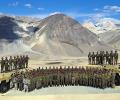
If China is accommodating regarding Depsang and Demchok, a resolution of the Sino-India territorial dispute in Eastern Ladakh could be possible.

Prime Minister Narendra Modi raised concerns about cross-border terrorism with Chinese President Xi Jinping, advocating for India-China cooperation to combat the threat. The discussion occurred during the SCO Summit amidst efforts to rebuild bilateral relations after a border standoff.
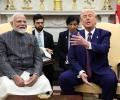
His assertion came after Trump claimed that his "friend" PM Modi has assured him that India would stop purchasing oil from Russia, a move he described as a big step toward increasing pressure on Moscow over its invasion of Ukraine.
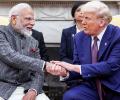
India has firmly rejected any involvement of a third party in its border dispute with China, declining an offer of mediation from US President Donald Trump. Foreign Secretary Vikram Misri emphasized India's commitment to resolving bilateral issues through direct dialogue, stating that New Delhi has always maintained a bilateral approach in dealing with such matters. This stance underscores India's position that the border dispute with China should be addressed through direct negotiations between the two countries.

China on Wednesday said the Chinese and Indian militaries are implementing the resolutions concerning the disengagement in eastern Ladakh along the Line of Actual Control (LAC) in an 'orderly' manner.

Across continents and cultures, people unknowingly cook similar dishes -- same idea, different ingredients or different method of preparation. Many Indian favourites have surprising global twins that nearly mirror our flavours, techniques or eating style.

China on Tuesday confirmed that it has reached an agreement with India to end the standoff between the two armies in eastern Ladakh.

'China did not expect India to show such strategic resolve in defending its territorial integrity.'
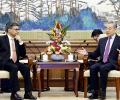
India and China held diplomatic talks in Beijing, focusing on effective border management and the resumption of cross-border cooperation and exchanges, including on trans-border rivers and the Kailash-Mansarovar Yatra. The meeting explored measures and proposals to implement decisions made during the Special Representatives (SR) dialogue in December. Both sides agreed to work together for the next SR meeting in India later this year.

Two senior Chinese ministers attended India's Independence Day reception in Beijing, signaling a potential improvement in relations ahead of Prime Minister Modi's expected visit to China for the Shanghai Cooperation Organisation summit.

India and China on Monday decided to resume the Kailash Mansarovar Yatra as the two sides agreed to take certain people-centric steps to 'stabilise and rebuild' ties.
